
Residential Epoxy Garage Floors in Spearfish, SD
A garage floor takes more abuse than any other floor in your house. It holds 4,000-pound vehicles, takes dropped wrenches and leaking oil, and in the Black Hills it sits under slush and mag chloride half the year. Bare concrete soaks all of that up. A properly installed epoxy coating seals it out and turns the garage into a space that’s easy to clean and good to look at.
The key words are properly installed. Most garage coatings that peel, bubble or wear through in a few years didn’t fail because of the color or the brand on the bucket. They failed because the slab wasn’t prepped, the moisture wasn’t checked, or the coats were rushed. This page walks through how a residential garage floor should be done, so you know what to ask for, whether you hire us or someone else.
Residential Epoxy Garage Floors At A Glance
|
Question |
Short answer |
|---|---|
|
How long does it last? |
10–20 years when professionally installed |
|
How long is the install? |
2 days on site for most homes |
|
When can I park on it? |
Usually a few days after the topcoat, depending on temperature |
|
What does it cost? |
About $2,000–$10,000 for a typical two-car garage; depending on square footage |
|
Best finish for most garages |
Full flake epoxy with a polyurethane topcoat |
|
What matters most? |
Diamond-ground prep, a moisture check and a full cure between coats |
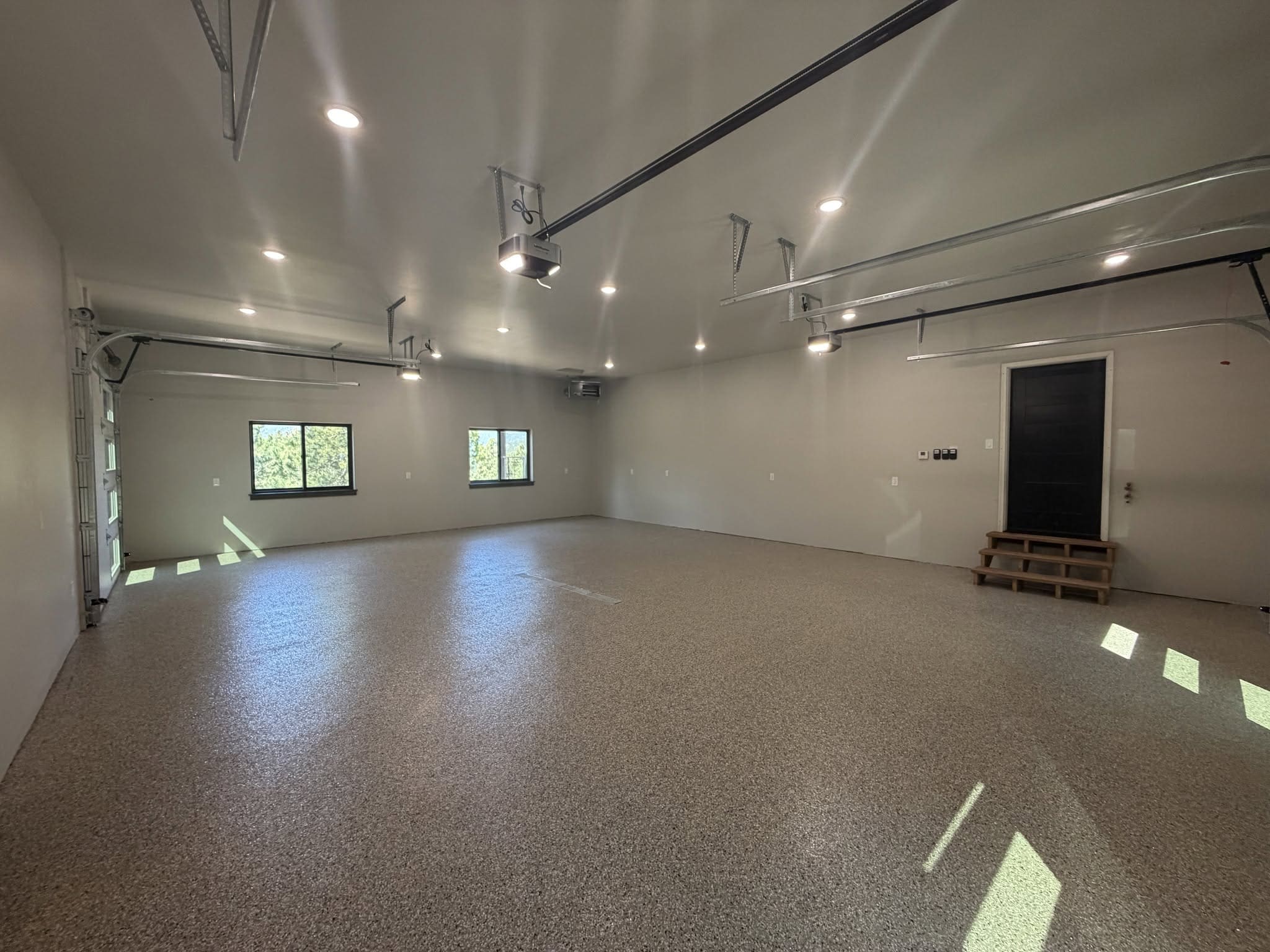
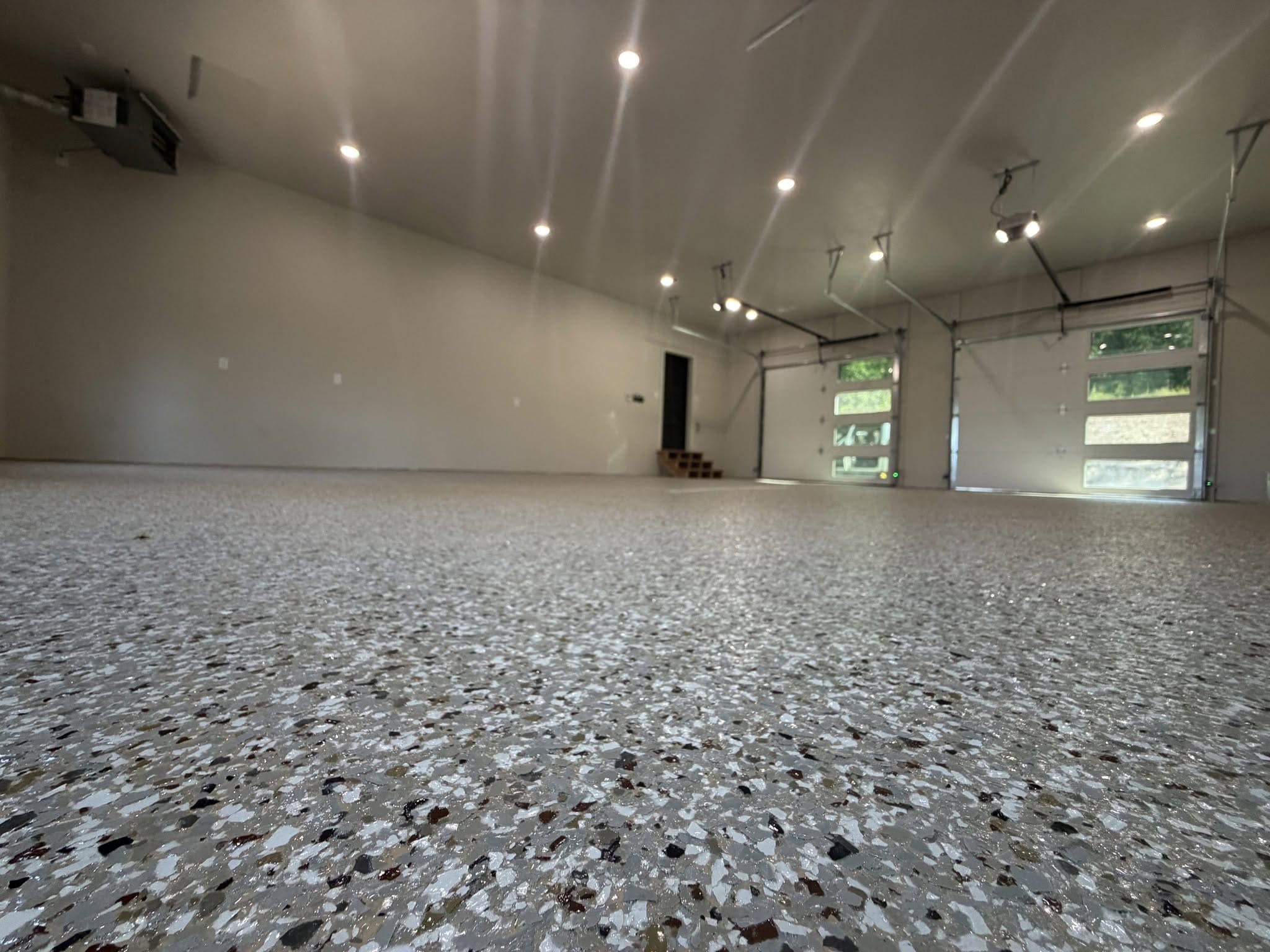
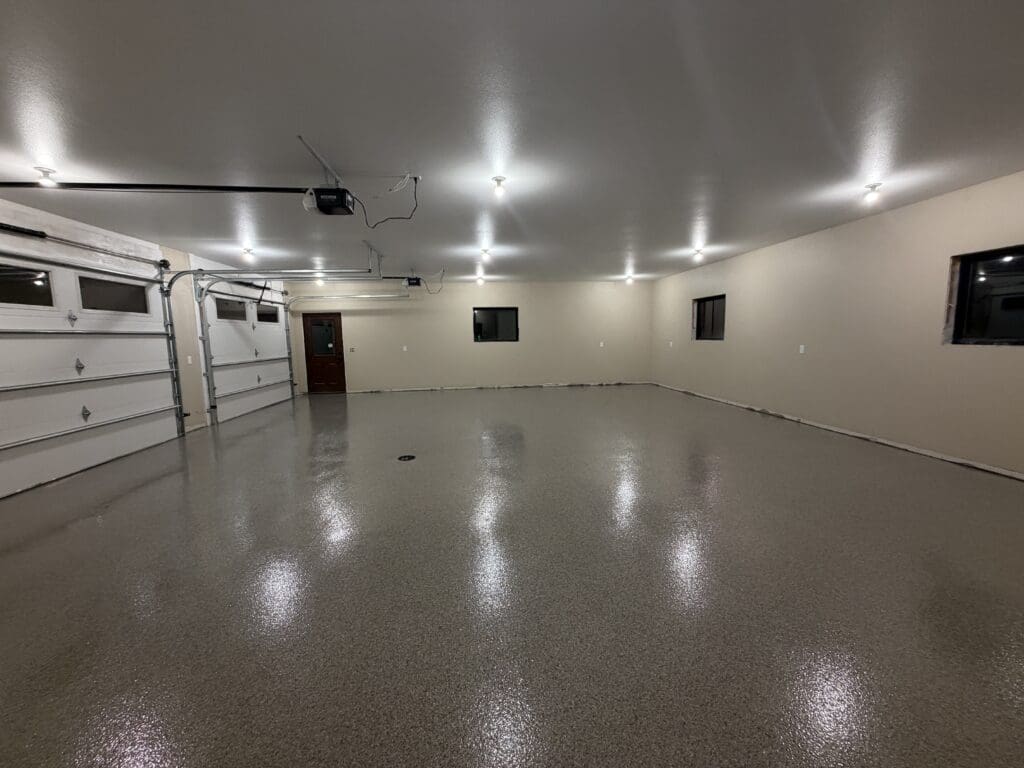
Residential Epoxy Floors We've Completed in Spearfish & The Black Hills


What Is an Epoxy Garage Floor?
An epoxy garage floor is a coating system bonded to the concrete slab: an epoxy base coat, a layer of decorative vinyl flake, and a clear protective topcoat. Installed over properly ground concrete, it seals out oil, road salt and moisture and typically lasts 10 to 20 years. Here’s what each layer does:
- A base coat of two-part epoxy that soaks into the ground concrete and bonds to it. This is the foundation of the whole floor.
- A flake broadcast, where vinyl chips are thrown into the wet base coat until it’s fully covered. The flake gives the floor its color, texture and grip.
- A clear topcoat that locks in the flake and takes the wear. We use a polyurethane topcoat because it’s harder and more resistant to scratches, chemicals and UV than epoxy alone.
Our system uses Sherwin-Williams TileClad epoxy for the base coat and ArmorSeal Rexthane 1 polyurethane for the topcoat. Both are commercial-grade products, from a line used in airport hangars, water treatment plants and mining operations.
Is a DIY Epoxy Kit as Good as a Professional Garage Floor?
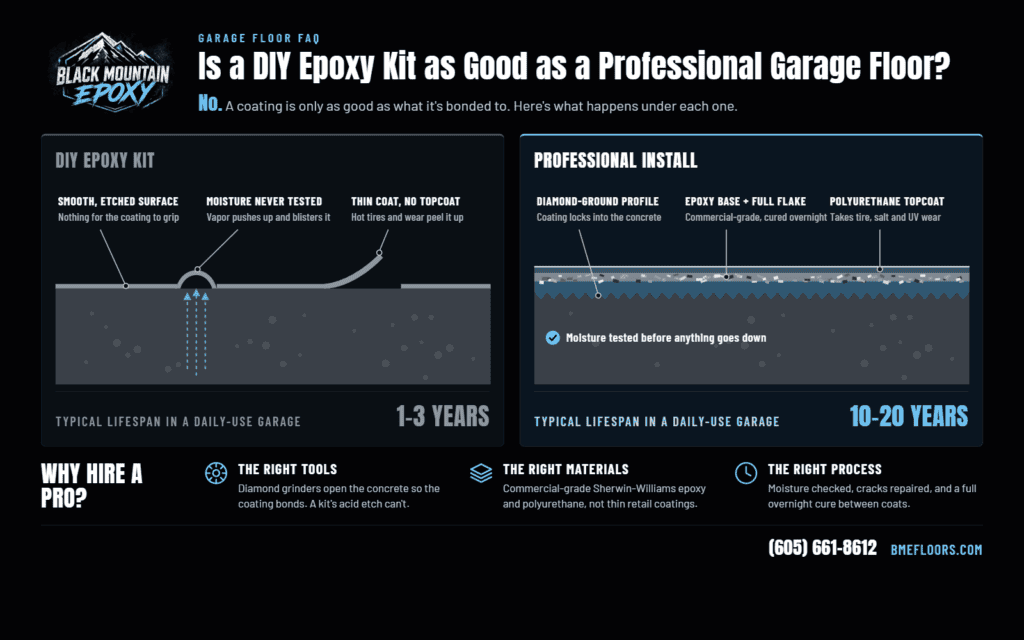
Not for a garage you park in every day. DIY kits rely on acid etching and thin coatings that typically last 1 to 3 years under vehicle traffic. A professionally ground and installed system usually lasts 10 years or more. A store-bought kit costs a few hundred dollars; here’s what you get for the difference.
|
|
DIY epoxy kit |
Professional coating system |
|---|---|---|
|
Surface prep |
Acid etch or degreaser |
Diamond grinding to open the concrete |
|
Coating thickness |
Thin, often water-based epoxy |
Full-strength, 100%-solids-class industrial products |
|
Moisture check |
Usually skipped |
Tested before anything goes down |
|
Crack and joint repair |
Patch kit, if any |
Cracks filled and ground flush |
|
Topcoat |
Often none, or a light clear coat |
Polyurethane topcoat for wear and chemical resistance |
|
Typical lifespan |
1–3 years in a working garage |
10+ years with normal care |
|
Hot tire pickup |
Common |
Rare on a properly cured system |
What Makes an Epoxy Garage Floor Last?
Surface prep, moisture control and cure time decide how long an epoxy garage floor lasts, far more than the brand or the color. Most early failures trace back to a floor that wasn’t diamond ground, was coated over moisture, or had its coats rushed. If you’re comparing quotes, these seven questions tell you more than the price does.
1. How the concrete is prepped
Epoxy bonds mechanically. It needs a rough, open surface to grip, something like fine sandpaper. The coatings industry measures this with the ICRI Concrete Surface Profile (CSP) scale, and floor coatings like ours call for a light-to-medium profile.
The only reliable way to get there on a garage slab is diamond grinding. Acid etching, the method most kits use, is inconsistent and leaves residue behind if it isn’t neutralized and rinsed perfectly. Pressure washing alone doesn’t open the surface at all.
We grind every floor with Niagara Machine prep equipment and vacuum the dust as we go. Grinding also takes off sealers, old paint, curing compounds and the weak top layer of the slab, all of which a coating would otherwise sit on top of instead of bonding to.
Ask: “Do you grind the floor, or etch it?”
2. Whether anyone checks for moisture
Concrete is porous, and moisture moves up through it from the ground. If too much vapor pushes up under a coating, it can lift it off the slab and show up as bubbles, blisters or peeling patches months later.
This matters most in new homes, where the slab is still drying out, and in garages without a vapor barrier under the concrete. There are standard ways to check, from a taped-down plastic sheet test to in-slab relative humidity probes. If the readings are high, the right move is to wait or use a moisture-mitigating primer, not to coat and hope.
Ask: “How do you check for moisture before you coat?”
3. How cracks and joints are handled
Almost every garage slab has cracks, and most have saw-cut control joints. Cracks get cleaned out, filled with a repair material and ground flush so they don’t telegraph through the finish. Control joints can be filled for a smooth, easy-to-clean floor, or left open, depending on the slab and what you want. We’ll walk you through the tradeoff on site.
A coating won’t stop a slab that’s still moving from cracking again. What it will do is keep water and salt out of the cracks you have, which is a big part of what makes concrete break down.
Ask: “What will you do with these cracks?”
4. The quality of the base coat
The base coat does the bonding. Thin, watered-down epoxies don’t penetrate or build enough film to hold up to vehicle traffic. We use Sherwin-Williams TileClad, a commercial-grade epoxy, applied at the thickness the manufacturer specifies.
5. Full flake coverage
For a garage, we broadcast flake “to refusal,” meaning we keep throwing chips until the wet base coat can’t take any more. A full broadcast hides minor slab flaws, gives the floor texture for wet boots and adds body to the system. Then the loose flake is scraped and swept off before the topcoat goes on.
6. The topcoat
The topcoat takes the daily wear: tire traffic, dropped tools, chemicals, UV light through an open door. Epoxy alone is hard but can scratch and amber in sunlight over time. A polyurethane topcoat like ArmorSeal Rexthane 1 adds the scratch, chemical and color resistance a garage floor needs.
Ask: “What’s the topcoat, and how many coats go down?”
7. Whether the cure is rushed
This is the one that gets skipped most often. Some contractors sell a one-day garage floor. That sometimes means starting before sunrise and topcoating late at night, before the base coat has fully cured, because the crew needs to be at the next job tomorrow.
We let the base coat cure overnight, undisturbed, and apply the topcoat the next day. It means your garage is out of use a little longer, but each layer bonds the way the manufacturer designed it to. For a floor you want to last a decade or more, we think one extra day is the right trade.
What Is the Best Epoxy Finish for a Garage Floor?
For most homes, full flake epoxy is the best garage finish. It hides dirt and slab flaws, adds slip resistance and holds up to daily parking. Metallic epoxy suits show garages, and solid color suits spaces where easy cleaning matters more than looks. A few things to think about when you pick:
- Color blend. Grays and earth tones hide dirt, salt residue and tire marks best. Lighter blends brighten the garage but show dirt sooner. Very dark floors show dust and salt film.
- Flake size. Larger chips read bolder and more decorative. Smaller chips give a tighter, more uniform look, closer to granite.
- Metallic or solid color. If the garage is more showroom than workspace, a metallic finish gives a marbled, three-dimensional look. Solid color is clean and simple, but it shows every scratch and speck of dust, so we usually steer working garages toward flake.
We bring samples to every quote. Look at them in your own garage light, because the same blend reads differently under LED shop lights than in daylight through an open door.
How Long Does It Take to Install an Epoxy Garage Floor?
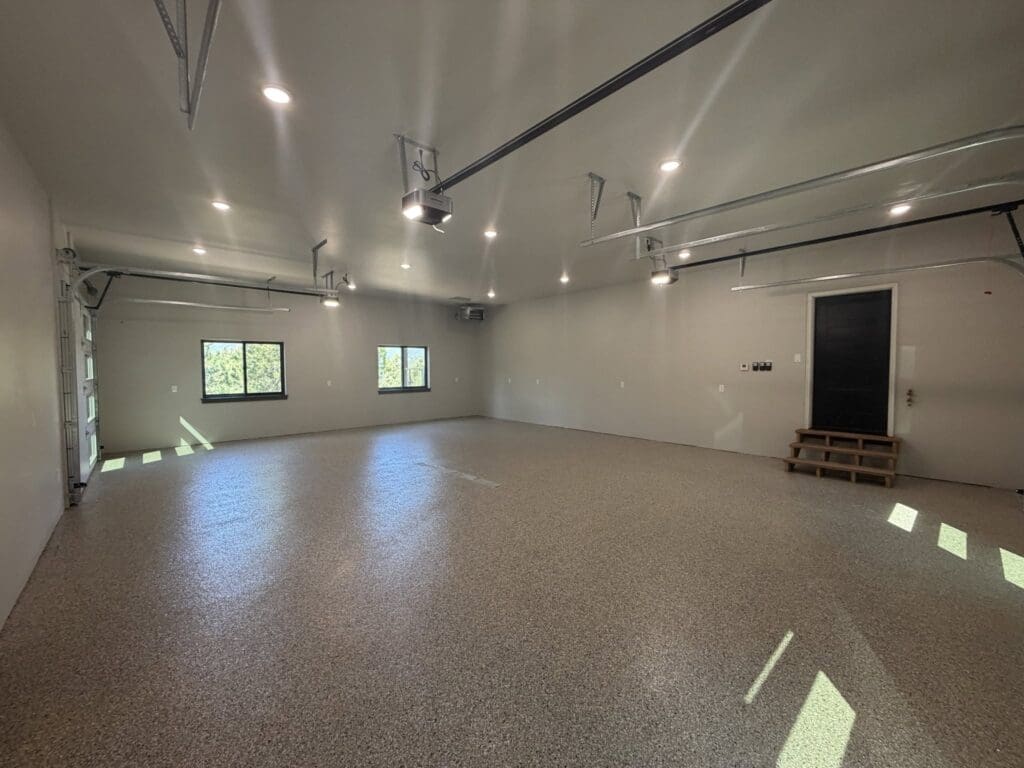
Most residential epoxy garage floors take two days on site: grinding, repairs, base coat and flake on day one, then the topcoat on day two after an overnight cure. Vehicles stay off for a few more days, depending on temperature. Here’s how it goes.
Before we arrive: Clear everything off the floor, including shelving that sits on the slab if you can. Let us know about floor drains, a garage heater or anything stored along the walls. We’ll need access to power.
Day one: We grind the full floor, vacuum it, repair cracks and joints, then apply the base coat and broadcast the flake. Grinding is loud and runs the better part of the morning. The floor cures overnight with the door closed.
Day two: We scrape and vacuum the loose flake, then roll on the polyurethane topcoat. Before we leave, we walk the floor with you and give you exact times for foot traffic and parking, based on that day’s temperature. Cold slabs cure slower, so a January job and a July job won’t have the same schedule.
How Do You Maintain an Epoxy Garage Floor?
Sweep weekly, mop with warm water and a pH-neutral cleaner, and squeegee out salty slush in winter. Avoid acidic or abrasive cleaners, wipe up chemical spills when you see them, and put pads under jack stands. In more detail:
- Sweep or dust-mop weekly. Grit under tires is what dulls a topcoat over time.
- Mop with warm water and a pH-neutral cleaner. Skip vinegar, citrus cleaners and anything acidic or abrasive.
- In winter, squeegee out salty slush instead of letting it dry on the floor. A floor squeegee by the door is the best tool you’ll buy for it.
- Wipe up oil, brake fluid and battery acid when you notice them. The topcoat resists them, but they shouldn’t sit for days.
- Use a plywood pad or puck under jack stands and kickstands. Point loads on a hot day can mark any coating.
Pros and Cons of Epoxy Garage Floors
An epoxy garage floor is durable, easy to clean and resistant to oil and road salt, but it costs more than bare concrete and depends heavily on installation quality. Here’s the honest list.
Pros
- Seals concrete against oil, salt, de-icers and moisture
- Wipes clean instead of staining
- Hides cracks and blemishes once repaired and coated
- Brightens the garage by reflecting light
- Lasts 10–20 years when professionally installed
Cons
- Costs more up front than paint or a DIY kit
- The garage is out of use for the install and the cure
- Can be slick when wet unless it has flake texture or an anti-slip additive
- Won’t stop a slab that’s still settling from cracking again
- Only as good as the prep: a poor install can peel within a few years
Myths About Epoxy Garage Floors
“Epoxy is slippery.” A smooth, glossy coating can be when it’s wet. A full flake floor has texture built in, and an anti-slip additive can go in the topcoat for entry areas that see a lot of snow.
“Epoxy always peels.” Epoxy peels when it’s put over unprepped concrete, over moisture, or under a rushed cure. Done right, it doesn’t.
“It turns yellow.” Epoxy alone can amber in sunlight. That’s one reason we finish every floor with a polyurethane topcoat.
“New concrete is ready right away.” New slabs need time to cure and dry before coating. If you’re building, talk to us early and we’ll work out timing with your builder.
How Much Does an Epoxy Garage Floor Cost?
A professionally installed epoxy garage floor typically costs about $2,000–$10,000 for a two-car garage. The final price comes down to a few things:
- Square footage. A one-car garage and a three-car garage with a shop bay are very different jobs.
- Slab condition. Heavy cracking, spalling, old coatings or sealers all add prep time.
- The system. Flake, metallic and solid color use different materials and labor.
- Extras. Stem walls, filled joints, or an anti-slip additive.
We give free quotes on-site or from photos, and the quote spells out exactly what’s included.
Residential Garage Floor FAQ
Is an epoxy garage floor worth it? For most homeowners who park in the garage daily, yes. A professional coating protects the slab from salt and oil damage, cleans up in minutes and lasts 10 to 20 years. It’s less worth it on a slab with active moisture problems, or in a garage you rarely use.
Does epoxy hold up in cold climates? Yes, when it’s installed in the right conditions. Once cured, a quality epoxy and polyurethane system handles freeze-thaw cycles and de-icing salts far better than bare concrete. The install itself needs a warm enough slab, so winter jobs need a heated garage.
How long does an epoxy garage floor last? A professionally installed system typically lasts 10 to 20 years in a residential garage. Prep and cure time matter more to that number than anything else.
Can you coat over an old coating or painted floor? Usually not directly. We grind off the old coating so the new system bonds to bare concrete, not to a layer that might already be failing.
Will it fix my cracked garage floor? We fill and grind cracks flush before coating, so the finished floor looks smooth. If the slab is still settling, new cracks can still form. We’ll tell you on site if we see signs of that.
Do you coat garages in winter? Yes, if the garage can be kept warm enough for the coating to cure. Heated garages can be done year-round. For unheated garages, we schedule around the forecast.
How soon can I park on it? It depends on temperature, so we give you exact times at the walkthrough. Expect to keep vehicles off longer in cold weather.
Is epoxy better than a polyaspartic or polyurea one-day floor? Those systems cure faster, which is their main selling point. We use an epoxy base and polyurethane topcoat with a full overnight cure because we trust how that system bonds and wears over time. Ask any contractor what their system is and why. A good one will have a clear answer.
Do you install garage floors outside the Black Hills? Yes. We’re based in Spearfish and travel nationwide for the right project.
Ready for a Garage Floor That Lasts?
Send us a few photos of your garage or have us come take a look. We’ll check the slab, show you samples in your own light and give you a clear price.